In the evolving landscape of health and wellness, the demand for precise physiological data has never been higher. Modern wellness professionals are shifting away from subjective measurements toward objective, data-driven insights to optimize patient outcomes. Finding the best body composition analyzer is no longer just about tracking weight, but about understanding the intricate relationship between lean mass, fat distribution, and skeletal alignment.
Across the globe, the integration of advanced sensors and AI is transforming how clinics and fitness centers operate. By moving beyond simple scales to comprehensive diagnostic systems, practitioners can now identify hidden health risks and tailor rehabilitation plans with unprecedented accuracy. This shift toward clinical-grade precision is essential for maintaining competitive edges in high-traffic commercial environments.
For those seeking the best body composition analyzer, the focus must be on a synergy of technologies. The HOWBODY S580, for instance, combines multi-frequency Bioelectrical Impedance Analysis (BIA) with 3D scanning to provide a 360-degree view of the human body, ensuring that no critical metric is overlooked.
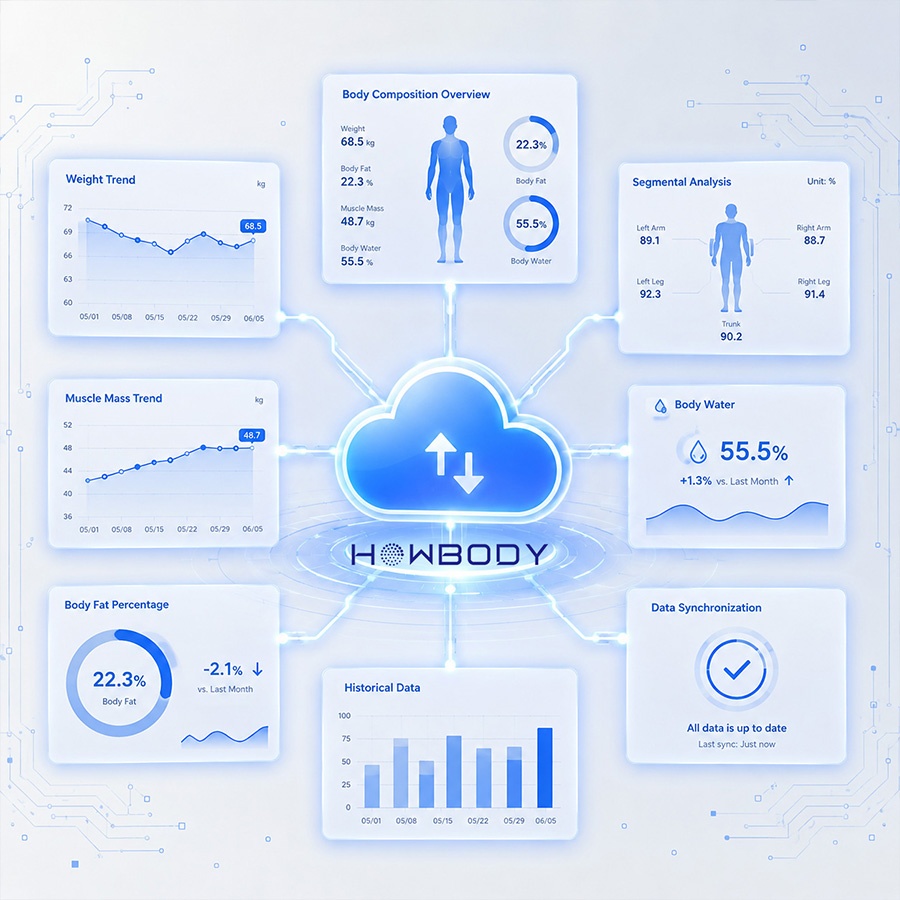
The Evolution of Body Assessment Technology
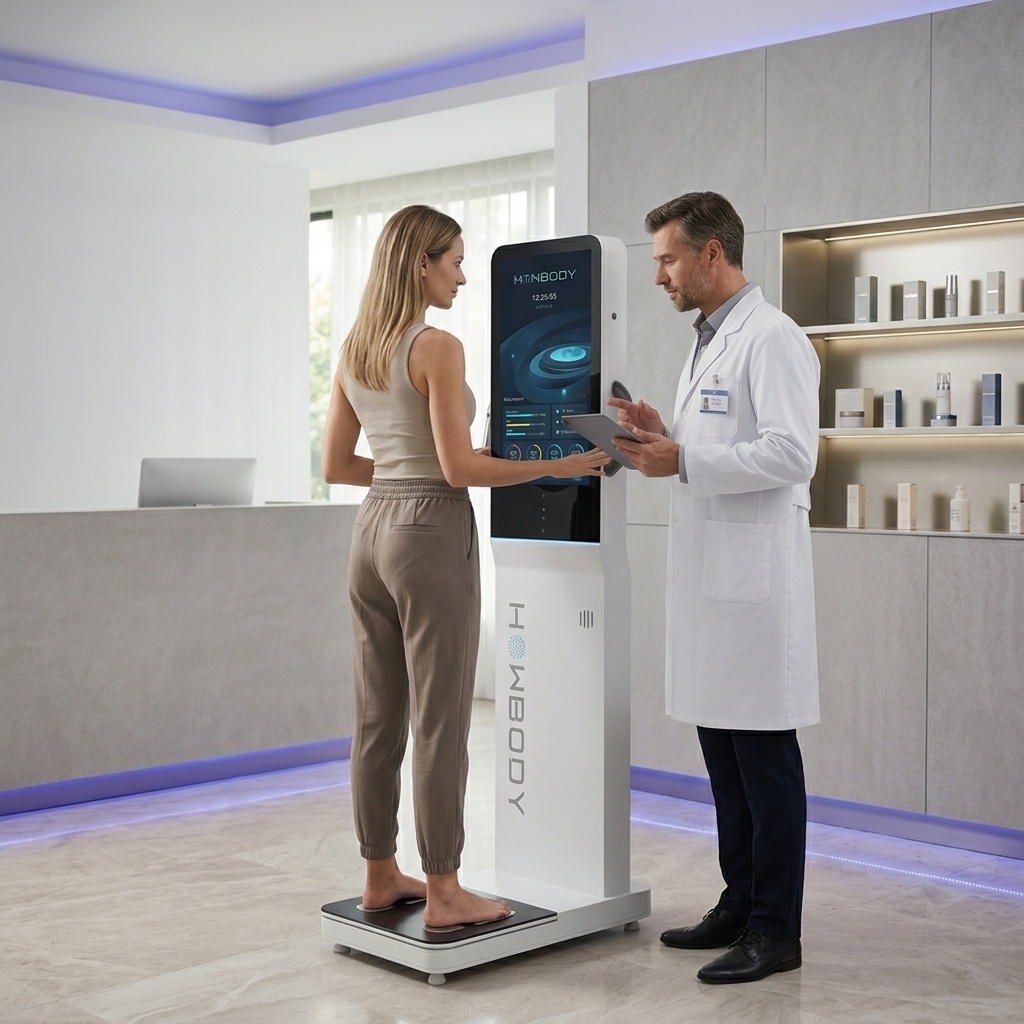
Body assessment has evolved from simple anthropometric measurements—like height and weight—to complex digital modeling. Historically, clinicians relied on skinfold calipers or manual tape measurements, which were prone to human error and client discomfort. The introduction of BIA brought speed, but often lacked the anatomical context needed for true rehabilitation and postural correction.
Today, the industry is witnessing a paradigm shift with the integration of binocular stereo 3D scanning and multi-frequency BIA. This dual-tech approach allows a device to act as the best body composition analyzer by eliminating data gaps, providing not just internal composition but external posture and circumference data in a single, seamless session.
Core Components of Professional Body Analysis
At the heart of a professional-grade system is the ability to merge different data streams. Multi-frequency Bioelectrical Impedance Analysis (BIA) is critical for penetrating cellular membranes to accurately measure muscle mass, visceral fat, and water distribution. When this is paired with 3D scanning, the result is a holistic biometric profile.
Operational speed is another core component that defines a commercial-grade system. In a busy clinic or gym, a process that takes 45 minutes is unsustainable. Modern systems, like the S580, reduce this to under 60 seconds for modeling, ensuring that high client throughput does not come at the expense of diagnostic accuracy.
Finally, data management and connectivity form the backbone of the user experience. Open API integration allows the analyzer to sync directly with CRM and health management software, transforming raw biometric data into branded, professional reports that clients can easily understand and track over time.
Clinical Precision in Commercial Environments
Maintaining clinical precision in a commercial setting requires hardware that can withstand high usage while remaining calibrated. For wellness professionals, the best body composition analyzer must provide a level of detail that supports medical-grade rehabilitation, including specific dimensions for posture analysis.
The S580 exemplifies this by delivering 42 total data points, covering 22 composition metrics and 10 detailed posture dimensions. This allows practitioners to identify musculoskeletal imbalances that a standard BIA scale would completely miss, making it a superior choice for medical aesthetics and rehab centers.
Beyond the hardware, the ability to visualize changes in real-time provides an emotional incentive for the client. When a user can see their 3D model evolve alongside their composition numbers, the trust in the professional's guidance increases, directly impacting client retention and business success.
Efficiency Metrics in High-Traffic Facilities
In high-traffic environments, the "time-to-insight" is the most critical KPI. Traditional manual methods of body assessment are not only tedious but invasive, often requiring 30 to 45 minutes per person. Transitioning to an automated system drastically reduces this overhead, allowing for a premium assessment service that generates higher revenue per hour.
By leveraging sensor-based objective data, facilities can remove the subjectivity and human error associated with manual entry. This efficiency enables a seamless flow from assessment to action, where the professional can refine a plan immediately after the 60-second scan is complete.
Comparison of Assessment Efficiency by System Type
Global Applications Across Wellness Sectors
The deployment of high-precision analyzers in over 50 countries demonstrates a universal need for objective body metrics. In premium gyms, these systems are used to validate the efficacy of training programs, while in corporate wellness hubs, they serve as a baseline for employee health initiatives, driving long-term engagement through visible progress.
In the medical aesthetics and rehabilitation sectors, the focus shifts toward anatomical correctness. Clinicians use the 10 posture dimensions to monitor corrective progress in patients recovering from injury or undergoing body contouring, ensuring that the results are balanced and physiologically sound.
Long-Term Value of Data-Driven Wellness
Investing in the best body composition analyzer provides a tangible return on investment by transforming a standard consultation into a premium, high-value assessment service. The shift from subjective "feeling" to objective "seeing" builds a foundation of trust and professional authority, which is critical for patient outcomes and business growth.
Furthermore, the longitudinal tracking of thousands of clients via cloud databases allows facility owners to analyze aggregate trends. This macro-level data can inform business decisions, such as introducing new specialized training modules based on the common postural imbalances found in their client base.
From a sustainability perspective, digital reporting replaces thousands of paper records, while the speed of the S580 reduces the energy and labor costs associated with manual assessments. The result is a streamlined, modern operation that aligns with the digital transformation of the healthcare industry.
Future Trends in Biometric Intelligence
The future of body analysis lies in the deeper integration of AI and predictive analytics. We are moving toward a world where a body composition analyzer does not just report current status but predicts future risks based on the rate of change in muscle-to-fat ratios and postural drift.
Digital twins are becoming a reality, where a client's 3D model serves as a living record of their health journey. As API ecosystems expand, we expect these systems to synchronize with wearable devices and nutritional apps, creating a closed-loop health ecosystem that provides 24/7 guidance.
As privacy standards evolve, enterprise-grade encryption and secure cloud synchronization will remain paramount. The goal is to provide a seamless, high-tech experience that respects biometric data integrity while pushing the boundaries of what is possible in preventative health.
Investment Return: Traditional vs. Intelligent Analysis Systems
| Evaluation Metric | Traditional Manual Method | S580 Intelligent System | Business Impact Score (1-10) |
|---|
| Assessment Time | 30-45 Minutes | Under 2 Minutes | 10 |
| Data Accuracy | Subjective / Human Error | Objective / Sensor-Based | 9 |
| Client Experience | Invasive / Tedious | High-Tech / Seamless | 10 |
| Reporting Speed | Manual Entry (Hours) | Instant Digital Generation | 9 |
| Revenue Potential | Low Value-Add | Premium Assessment Service | 10 |
| Scalability | Limited by Labor | High / Cloud Integrated | 8 |
FAQS
Unlike standard scales that only provide internal composition, the S580 integrates binocular stereo 3D scanning. This allows it to provide posture intelligence and precise circumference measurements, offering a complete anatomical profile rather than just a list of percentages.
Yes, the S580 is specifically engineered for rehabilitation centers and medical clinics. It provides 10 specialized dimensions of posture analysis, allowing clinicians to monitor corrective progress and identify imbalances with clinical-grade precision.
The entire process, which includes both the multi-frequency BIA analysis and the binocular stereo 3D modeling, is completed in under 60 seconds. This makes it ideal for high-traffic commercial environments where operational flow is critical.
Absolutely. The S580 supports open API integration, allowing it to seamlessly synchronize data with your current third-party health or CRM platforms for a unified, efficient workflow.
The device provides 22 comprehensive body composition metrics. These typically include muscle mass, body fat percentage, visceral fat, and water distribution across different body segments, giving a granular view of the client's physiology.
Yes, it features a robust multi-user cloud database. This enables professionals to store and compare a client's data over longitudinal periods, making it easy to visualize real progress and adjust plans accordingly.
Conclusion
The transition toward an integrated approach to body assessment—combining BIA and 3D scanning—represents the gold standard for modern wellness. By providing 42 total data points in under a minute, systems like the S580 eliminate the trade-off between speed and accuracy, allowing professionals to offer a premium, data-driven experience that enhances both client outcomes and business revenue.
As we look toward a future of AI-driven biometric intelligence, the ability to capture objective, longitudinal data will be the primary differentiator for successful clinics and gyms. We encourage wellness professionals to embrace these technological advancements to provide a higher standard of care. Visit our website for more information: www.howbodytech.com


